Software That Understands
The Science.
Biostatistics and bioinformatics support for research projects — study design, statistical analysis, and the software that goes with them: R, Python, web applications. Bounded missions of around six months, fully remote, with research organisations across France and Europe. Available now.
Publications, software & CV on agouy.github.io ↗A researcher who builds the tools
AlgoLife is Alexandre Gouy, PhD in computational biology (University of Bern, summa cum laude). My own research is in population genomics and evolutionary biology — polygenic selection, adaptive introgression, demographic inference — published in Molecular Biology and Evolution, Nucleic Acids Research and Forensic Science International: Genetics.
I work with research groups as an external statistician and developer: designing the study, running the analysis, and writing the software that makes both reproducible. Day-to-day tooling is R and Python, and web applications when a team needs to keep working with the results itself. Domains: population genomics, evolutionary biology, ecology and biodiversity data, conservation genetics, and forensic genetics.
Also, further back: data science and bioinformatics work with Novartis, Roche and Pfizer, and on the Databricks, Palantir Foundry and Tercen platforms.
Core Competencies
- Population genomics & evolutionary biology
- Statistics & experimental design
- Ecology, biodiversity & conservation genetics
- R, Python & web applications
- Reproducible pipelines & sequence data (NGS)
- Teaching & scientific training
Two Offers
Analysis missions for research projects, and teaching. Both are the offer — neither is a sideline.
Research Missions
Biostatistics and bioinformatics support for a defined research project. I join the team as an external analyst and developer, for the length of the question — not the length of a contract renewal cycle.
- Bounded scope — Typically around six months, agreed up front with a clear question and clear deliverables
- Fully remote — Remote collaboration is the normal working mode, with labs and institutes across Europe
- Real deliverables — Analyses, a written methods and results report, reproducible code, and a web application where it helps
Teaching & Training
Around 530 hours of university teaching, at the University of Bern and the University of Limoges, plus many professional training sessions delivered for a range of clients. Workshops of one to three days, on-site or remote, in French or English.
- For research — Doctoral schools, formation permanente at INRAE, CNRS and universities, research institutes and workshop providers — statistics and experimental design, R and Python, reproducible workflows, genomics and data analysis
- For organisations and companies — Data analysis foundations, and working effectively and responsibly with AI tools
- Practical format — One to three days, on-site or remote, in French or English
What I work on
The kinds of question a lab, a conservatoire or an institute actually needs answered.
Statistical Analysis & Experimental Design
The analysis your project needs, and the design work that should come before it. Sample sizes, power, confounding and model choice settled while they can still change the protocol.
- Experimental and sampling design, power analysis
- Mixed models, multivariate analysis, model selection
- Methods and results sections written to journal standard
Population Genomics & Sequence Data
Analysis of sequence data in population genomics and evolutionary biology — the field I publish in. From raw reads to a defensible inference about the populations behind them.
- Variant calling, filtering and quality control on NGS data
- Population structure, diversity, demographic inference, selection scans
- Conservation genetics: effective population size, gene flow, inbreeding
Ecological & Spatial Data Analysis
Ecology and biodiversity data as it actually arrives: unbalanced, spatially structured, full of zeros and detection problems. Analysed accordingly.
- Species distribution, occupancy and abundance models
- Spatial and remote-sensing data, habitat and land-use analysis
- Long-term monitoring series and biodiversity indicators
Research Software & Reproducible Workflows
When an analysis has to be re-run — by someone else, on next year’s data, in front of a reviewer — it needs to be a pipeline or an application, not a folder of scripts.
- R and Python packages, and web applications the team can use without me
- Reproducible pipelines, version control, documented environments
- Handover and training so the team can run it without me
Selected Work
STRAF
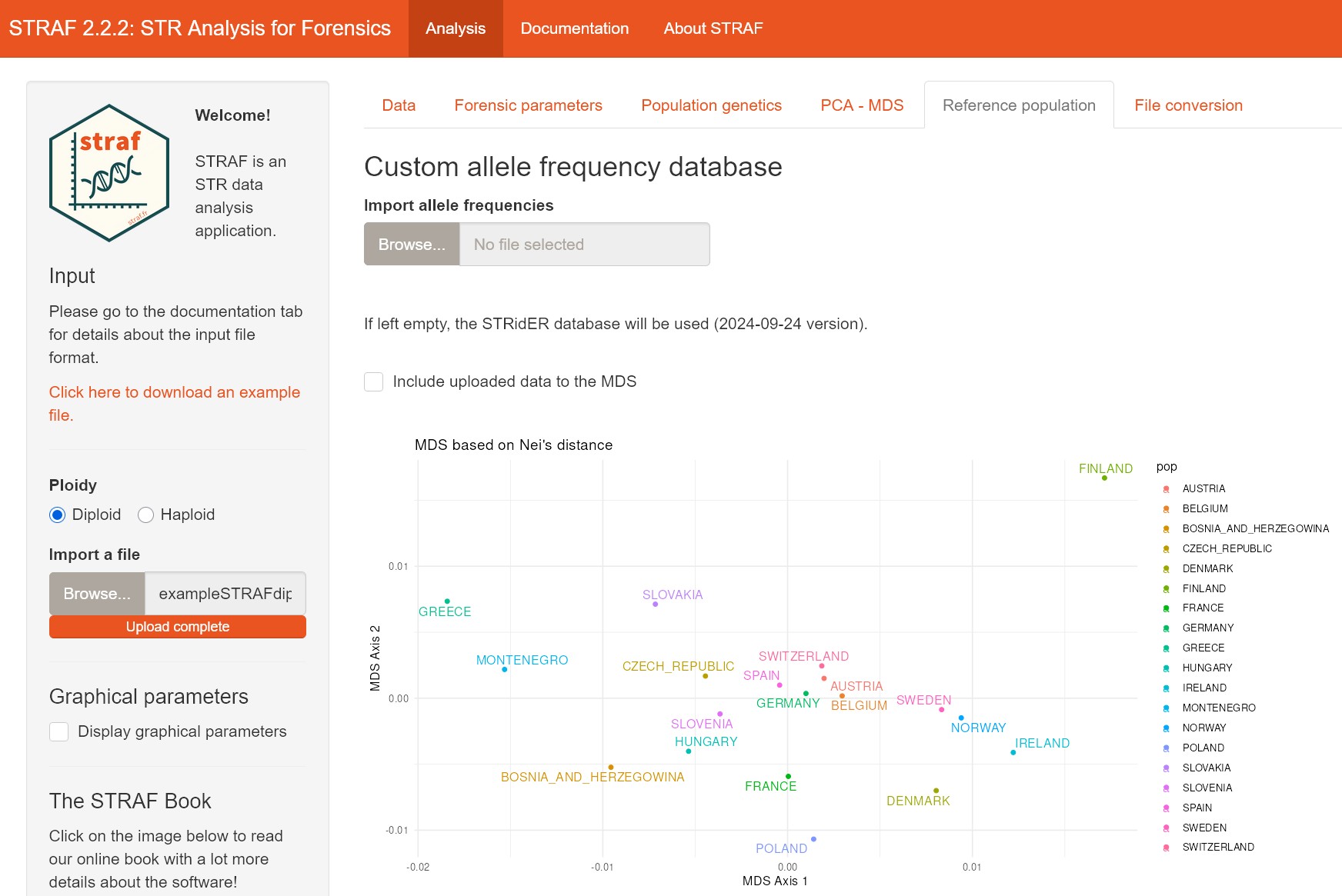
An online tool and R package for STR data evaluation in forensic genetics. I am its author and maintainer. STRAF computes the parameters a forensic population study needs from a single input file, through an interface a non-specialist can actually use.
Reach
Cited more than 380 times, and used by forensic genetics laboratories worldwide.
Published twice in Forensic Science International: Genetics:
- • Gouy A, Zieger M (2025). STRAF 2: New features and improvements of the STR population data analysis software . Forensic Science International: Genetics.
- • Gouy A, Zieger M (2017). STRAF — a convenient online tool for STR data evaluation in forensic genetics . Forensic Science International: Genetics.
- R
- Shiny
- Population genetics
- Open source
A multi-year statistical and software partnership
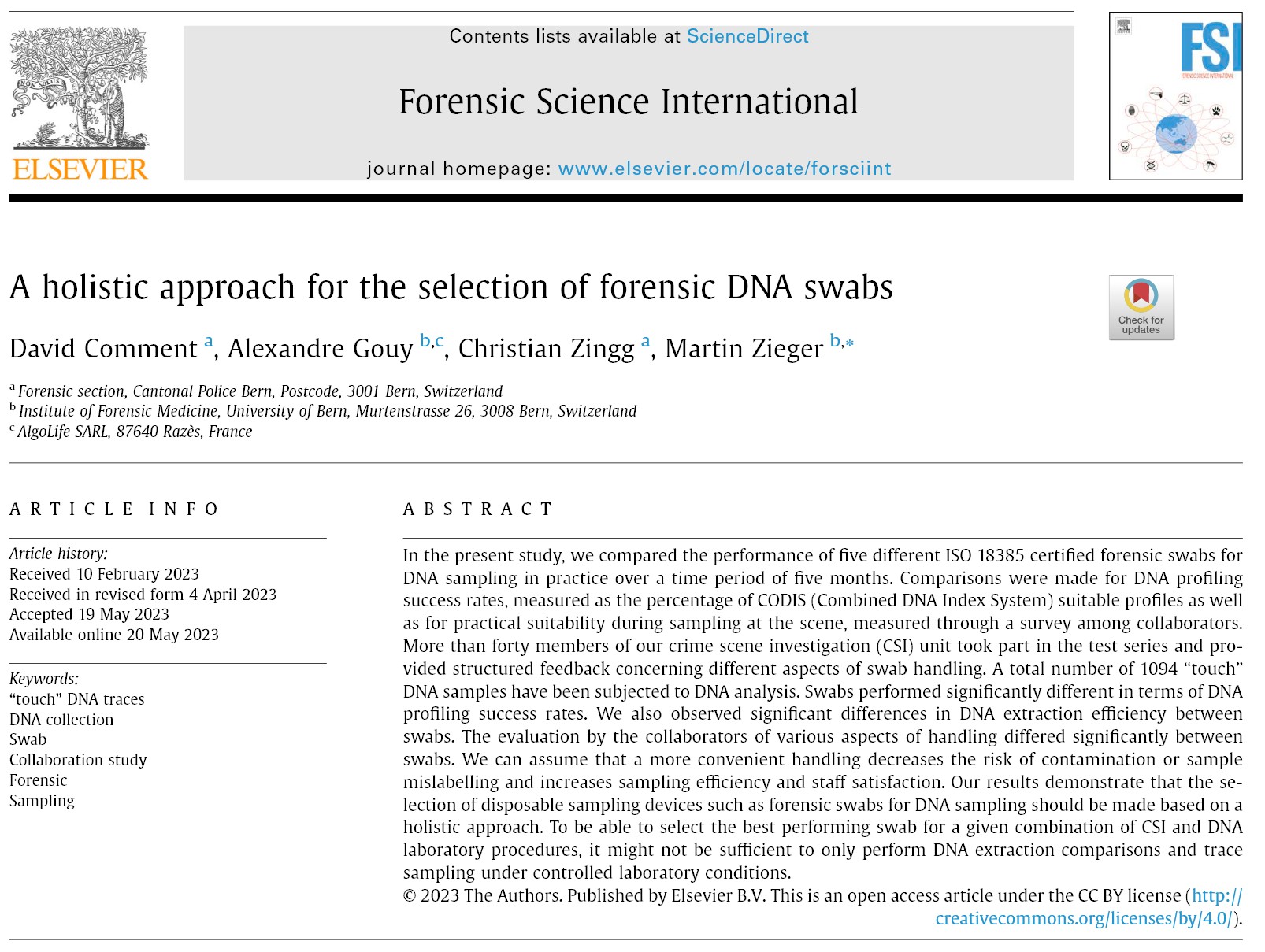
A long-running external collaboration with one research institute, still producing publications. It is the clearest picture of how this offer works in practice: I am not a supplier delivering a one-off analysis, I am the statistician and developer the group works with across successive studies.
What I contribute
Study design, statistical analysis and software development — from planning the experiment through to the code and the manuscript.
Seven co-authored publications since 2017, the most recent in 2026. Two of them:
- • Tièche EP, Indra L, Gouy A, Heckel G, Zieger M (2026). Dual-kingdom necrobiome succession extends postmortem interval estimation into skeletonization . Forensic Science International: Genetics.
- • Gouy A, Zieger M (2025). STRAF 2: New features and improvements of the STR population data analysis software . Forensic Science International: Genetics.
- Study design
- Statistical analysis
- Machine learning
- Software
Mitan
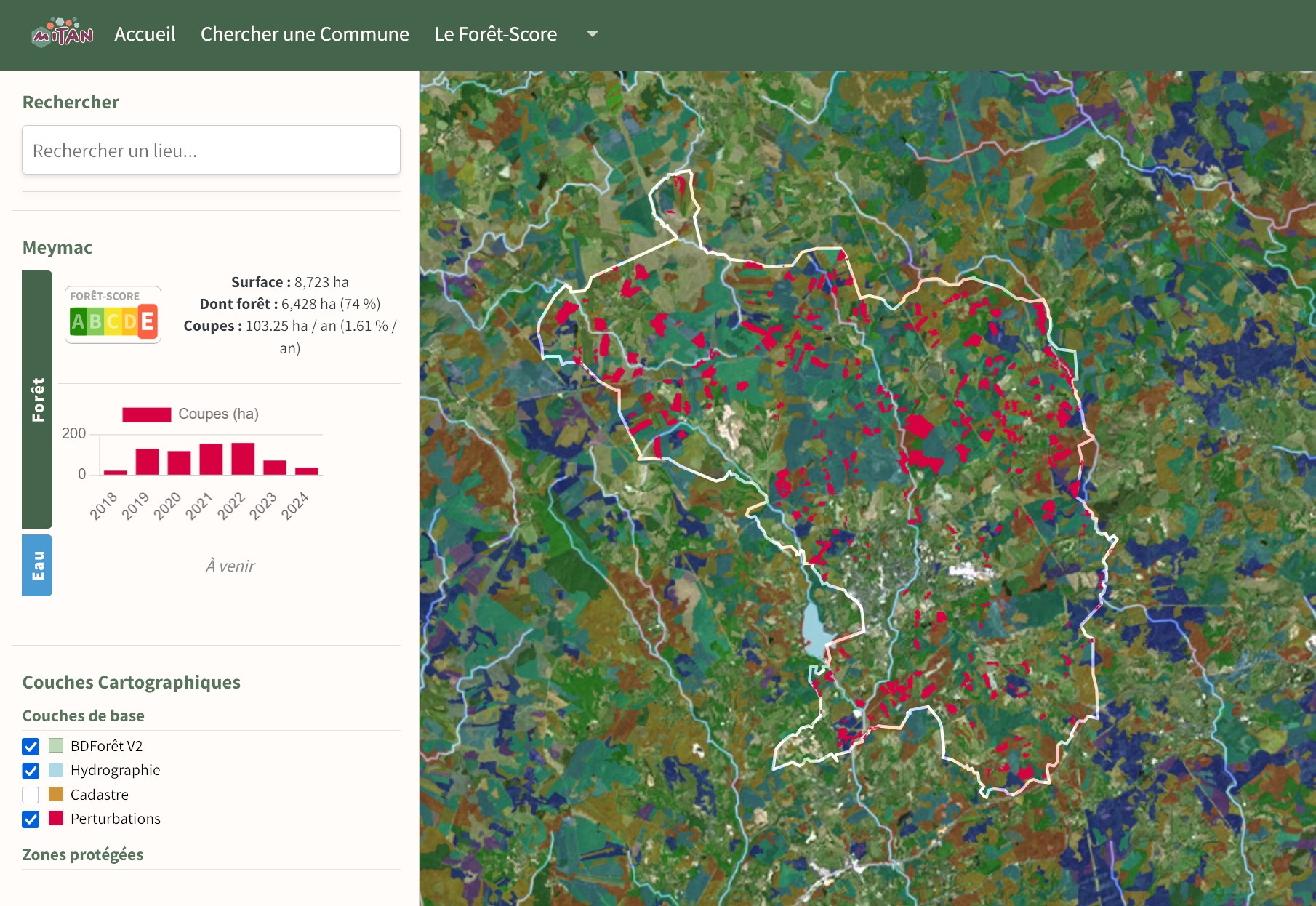
A geospatial platform for monitoring forests and natural areas, combining remote sensing with local ecological knowledge. Built for the people who manage the land: communes, natural-area managers and NGOs.
Outcome
A decision-support tool deployed with French communes and NGOs for sustainable land and forest management.
- Remote sensing
- Biodiversity
- Spatial analysis
- Full stack
End-to-end omics pipeline automation
A fully automated bioinformatics pipeline for high-throughput omics data, from raw sequencing output to biological results, with the analysis standardised across runs.
Outcome
Processing time reduced by 80% and analyses standardised.
- Workflow automation
- Genomics
- Reproducibility
Working together
What a mission looks like in practice, for anyone deciding whether they can contract me.
Mission format
A bounded mission on a defined question, typically around six months. Scope, deliverables and schedule are agreed before the work starts. Shorter missions and one-off analyses are possible when the question is narrow enough.
Remote by default
I work with institutions across Europe, not only in France. Remote collaboration is the normal mode rather than an exception: a regular call with the team, shared code, and on-site visits when a project genuinely needs them.
What you get
The analysis itself, a written report of methods and results usable in a manuscript or a deliverable, the reproducible code behind it, and a web application when the team needs to keep exploring the data afterwards.
Starting a conversation
A 30-minute call is usually enough to tell whether the question fits, and to size the work. If it does not fit, I will say so. Bring the question, the data you have or expect, and the deadline you are working against.
Have a project that needs an analyst?
Tell me the question, the data and the deadline. A short call is usually enough to know whether it fits.